
I Want to Learn More About Sex Trafficking in My Community
Why this matters: Trafficking is not a far away issue. It happens in every zip code of Greater Sacramento. Understanding the realities empowers you to spot warning signs, support survivors, and prevent exploitation.

In Sacramento County
estimated sex trafficking victims between 2015 and 2020
Survivors were most often connected to trafficking through the street (32.7%) and online (31.8%), followed by truck stops (4.7%) and bars and casinos (3.3%).
61.6% started selling sex for a third party involuntarily. Black or African American women made up 47.5% of the study sample, compared with 10.9% of the county population.
Learn more and access the full report here:
Click HereSource: Barrick, Pfeffer, Tueller et al., Estimating Sex Trafficking in Sacramento County: Final Report (2022). RTI International, Community Against Sexual Harm, and Sacramento State University Institute for Social Research.
of survivors interviewed for the Sacramento County study did not know they would be doing sex work when they entered the situation.
Many never know they were trafficked
It almost never begins with a kidnapping. That is the picture most people carry, and it is the reason so much of this stays invisible.
The researchers mapped how women entered these situations and found a continuum, from fully voluntary to fully forced, with the vast majority landing somewhere in the middle. Some were recruited for completely different work: dancing, housework, childcare, cleaning, escort work. The report describes them as "genuinely tricked into a situation in which they had to sell sex." Others were drawn in through a false pretense of a romantic relationship, a pattern common enough that the study gives it its own section.
Because there is no single moment of obvious force, there is no moment that feels like a crime.
Federal law does not require chains. It requires force, fraud, or coercion. Fraud can be a job offer that was never real. Coercion can be a debt, a threat, or an ID held by someone else. A woman can meet the legal definition of a trafficking victim and never once use the word about herself.
And what she cannot name, she does not report.
That is why the county's real number is so much larger than its official one. The same study found 11.2 times more victims in Sacramento County than law enforcement and service providers identified.
It did not look like trafficking. It looked like this.
Survivors in the study experienced an average of 8 different forms of exploitation each. These are the signs to look for. Not the word.
All figures from Barrick, Pfeffer, Tueller et al., Estimating Sex Trafficking in Sacramento County: Final Report (2022), Chapters 4, 6 and 7. RTI International, Community Against Sexual Harm, and Sacramento State University Institute for Social Research. Read the full report
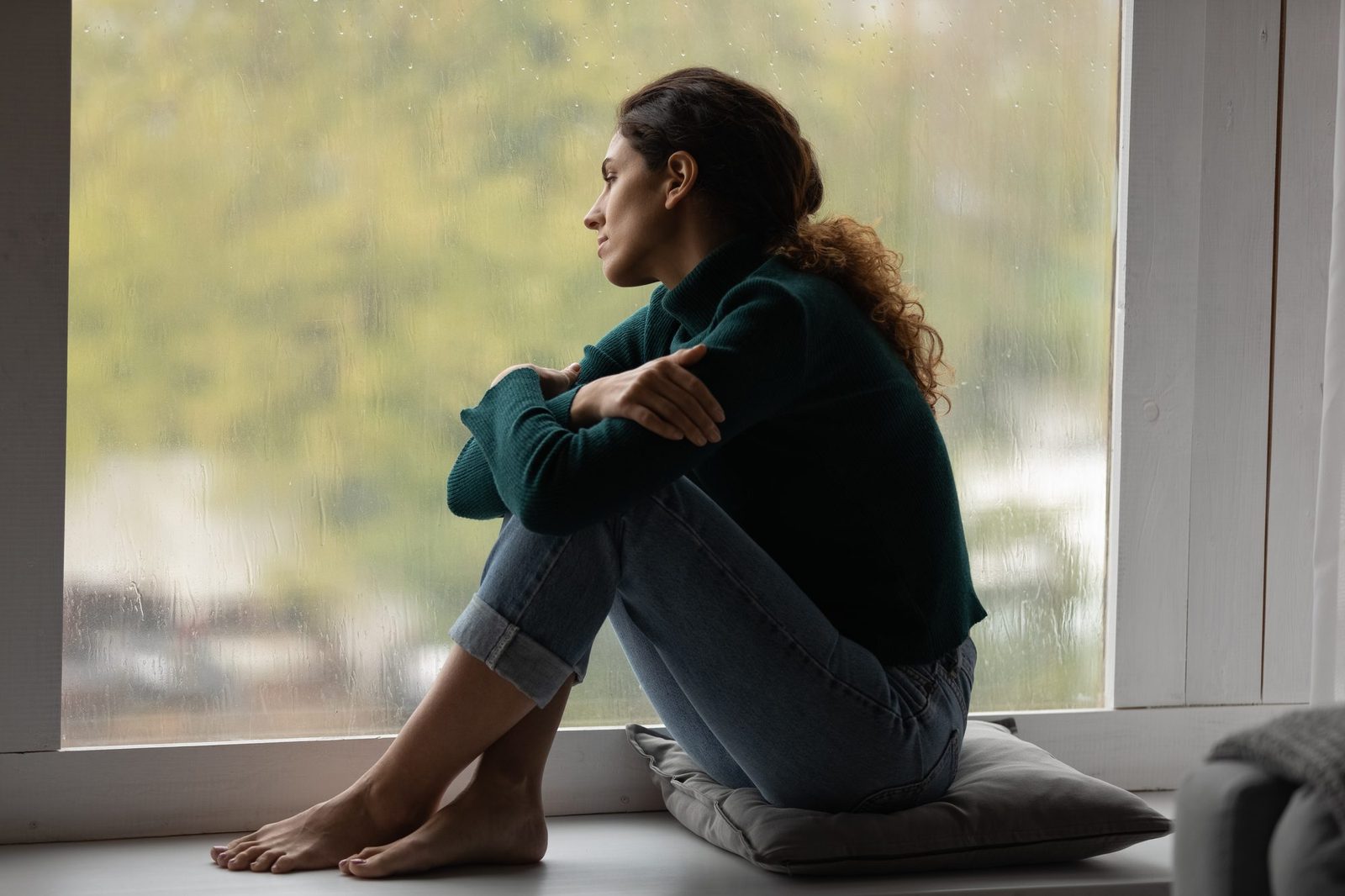
Understanding Is Sex Trafficking
U.S. law defines human trafficking as the use of force, fraud, or coercion to compel a person into commercial sex acts, or against his or her will.
The one exception involves minors and commercial sex. Inducing a minor into commercial sex is considered human trafficking regardless of the presence of force, fraud or coercion.
Action-Means-Purpose
The Action-Means-Purpose (AMP) Model can be helpful in understanding the federal law. Human trafficking occurs when a perpetrator, often referred to as a trafficker, takes an Action, and then employs the Means of force, fraud or coercion for the Purpose of compelling the victim to provide commercial sex acts or labor or services.
At a minimum, one element from each column must be present to establish a potential situation of human trafficking.

What is done
- Recruiting – Targeting someone's vulnerabilities or grooming them to gain control.
- Using – Supplying alcohol or drugs to build or exploit dependence.
- Harboring – Isolating, confining, or constantly monitoring a person.
- Transporting – Moving or arranging travel for someone against their will.
- Providing – Treating a person as a commodity and giving them to another.
- Obtaining – Seizing or trading something to gain control over a person.
- Soliciting – Offering housing, food, money, or other value in exchange for sex.
How it is done
- Force: physical assault, sexual assault, isolation, and/or confinement of another person.
- Fraud: false employment offers, sham marriages, lying about work situation, withholding wages, and/or taking legal documentation.
- Coercion: threats of violence, threats of arrest or deportation, debt bondage, and/or withholding legal documentation.
Purpose. A commercial sex act: any sex act on account of anything of value given to or received by any person.
How Did This Happen?
Trauma, poverty, and abuse often leave deep vulnerabilities that traffickers and the sex industry prey on.
It may look like someone "chose" this, but the reality is far more complex. Most are surviving, not deciding.
Click here and read this article
"Prostitution Is Not Just Another Job" by Lauren Hersh, Director of Anti-Trafficking Policy and Advocacy at Sanctuary for Families.

Why Women Don't Leave
Most victims of sex trafficking don't see themselves as victims. Grooming convinces them that selling sex is their choice, creating emotional bonds as strong as chains.
They rely on traffickers for basics like money, shelter, and food, and face threats of violence if they leave, so fear rules.
Traffickers are usually people they know who exploit unmet needs like housing, cash, love, or belonging. Outright kidnappings are rare.
Some don't even realize they're being trafficked.
What is Trauma Bonding?
Trauma bonding happens when a person forms a strong emotional attachment to someone who abuses or exploits them. This bond develops through repeated cycles of fear, control, and intermittent kindness, where moments of affection are used to keep the person loyal.
For many women in trafficking situations, their trafficker may also be their only source of food, shelter, or emotional connection. The same person causing harm is also meeting basic needs, creating a powerful psychological trap.
It's not just fear. It's the belief that leaving would be more dangerous, or even impossible.
Breaking this bond takes time, safety, and consistent, compassionate support.
The sex industry as a whole.
Exploitation. Sex work. Pornography. Stripping. Online content. All of it.
Is it really her choice?
Trafficking is a specific crime with a legal definition. Most of the sex industry is not trafficking, and this page is not claiming otherwise.
But set the legal line aside and ask a different question. Look at the women across the whole of it, and at what happened to them before they arrived. A pattern shows up that is hard to unsee.
The choice is real. The question is what was left of it by the time she made it.
Trauma comes first, then the decision
Writing for Sanctuary for Families, Lauren Hersh took apart a magazine profile that framed prostitution as just another job. The article featured a woman who entered voluntarily, in her forties, after she lost her job.
Twenty-six years earlier, at fourteen, she had been kidnapped, trafficked and raped.
Another woman in the same article was orphaned young, had children while still a child herself, and entered because she could not find another way to get money for food. By fifteen she had a pimp and no say over clients if she wanted to be paid.
Nobody coerced the first woman at forty. She decided. But the shape of what felt possible, survivable, and normal to her had been set a long time before, by someone who hurt her when she was a child.
Why she will tell you she chose it
Hersh spent eight weeks with seven survivors. For most, childhood sexual abuse, domestic violence and trauma came first. Poverty, homelessness and time in the child welfare system were the norm rather than the exception.
All seven now oppose legalising the trade. Most said that while they were still in it, they would have argued the other way. One explained that she had to make it feel legitimate in order to keep going. Another put it plainly:
"I would have told you I was doing it voluntarily."
A survivor, quoted in Lauren Hersh, Prostitution Is Not Just Another Job. Read the article
That is the part most people miss. Asking a woman while she is still in it whether she chose it will usually get you a yes. It has to. Naming it as harm while you are still living inside it is unbearable.
Compared with women in similar low-wage jobs, not with women in general
This is the comparison that matters. Researchers studied around 600 workers across two cities and measured people in the sex industry against people in two other low-income service occupations, food and beverage serving, and barbering and hairstyling. Same wage bracket, same economic pressure. The differences were still there.
McCarthy, Benoit and Jansson, comparing adults in sex work with adults in food and beverage serving and in barbering and hairstyling. Childhood poverty, abuse and family instability were each independently associated with adult sex work, alongside limited education and employment options. Read the study
The authors are careful, and so are we: early misfortune did not tell the whole story. Present economic need mattered too. Both things are true at once, and that is the point. Almost nobody arrives here from a life full of options.
What it looks like once she is in it
Across nine countries, researchers interviewed 854 people currently or recently in prostitution. 89% wanted to escape but had no other options for survival. 68% met the clinical criteria for PTSD, at a severity the researchers placed alongside combat veterans and survivors of state torture. 75% had been homeless at some point.
Farley et al., "Prostitution and Trafficking in Nine Countries," Journal of Trauma Practice 2(3-4). Abstract, U.S. Department of Justice
And the door does not open on the way out
Leaving does not hand the choice back. In the largest national survey of U.S. trafficking survivors, 43% earn under $25,000 a year, against 26% of the general population. Seven or more years after getting out, 29% are still under $25,000.
62% were cited, arrested or detained, 81% of them while they were being exploited. Of those left with a record, 69% said it stopped them getting or keeping a job.
The record she picked up while being exploited becomes the reason she cannot get hired out of it.
Polaris National Survivor Study, N=457. In Harm's Way
Pornography and online content are part of this picture
The women performing are not a separate category of person. Researchers compared 134 female adult film performers in California against 1,773 women of similar age from a state health survey. What they found in the performers' childhoods:
In the twelve months before they were surveyed, 34% had experienced domestic violence, against 6% of other women their age. Half were living in poverty.
Not every woman in this industry carries that history, and we are not claiming she does. But three times the rate of childhood sexual violence and five times the rate of foster care is not a coincidence, and it is not a story about free choice.
Grudzen et al., Psychiatric Services. Comparison of the mental health of female adult film performers and other young women in California
The question was never whether she said yes. It is what her options were when she said it.
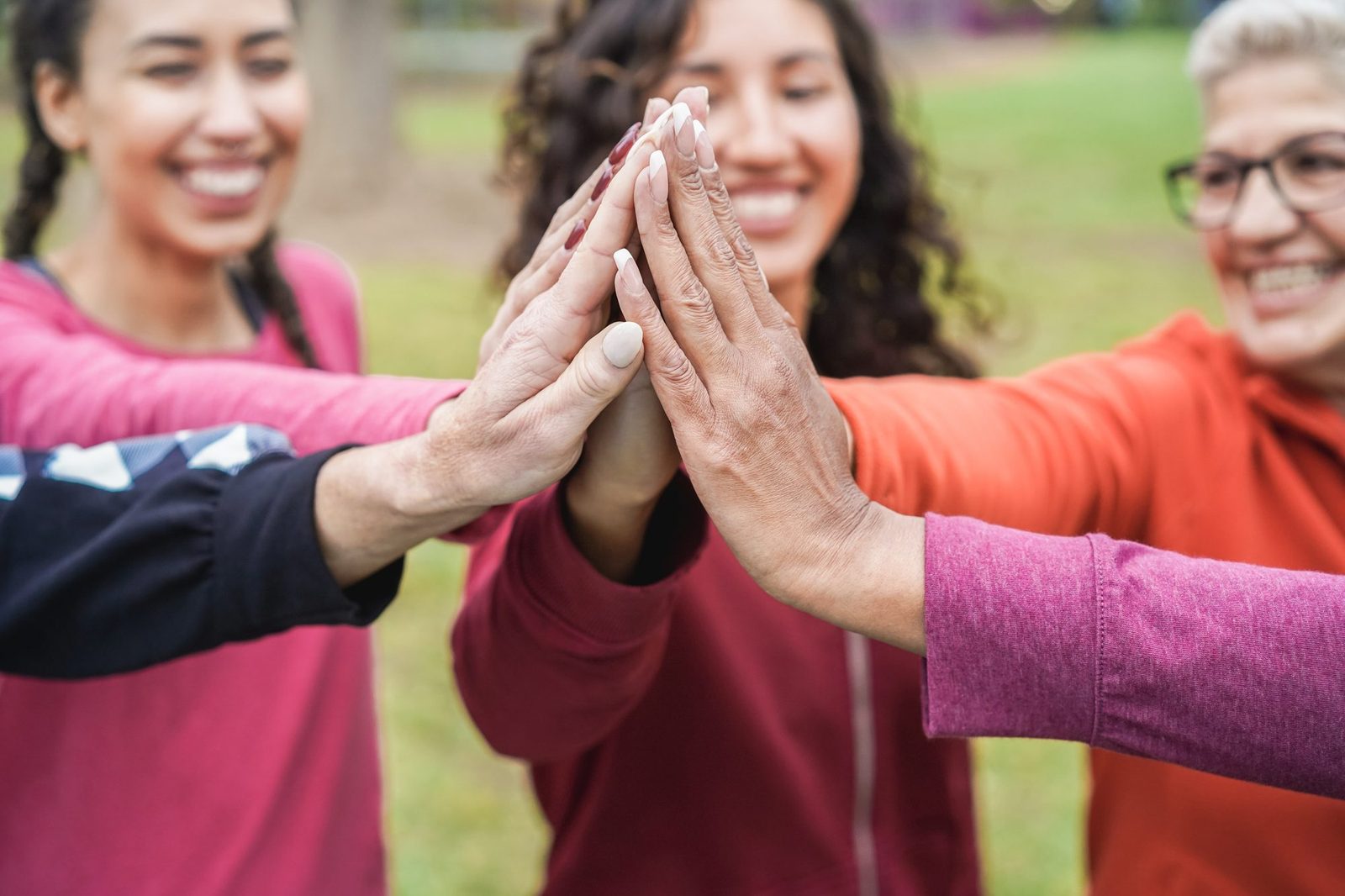
Survivors need time to heal
Survivors often carry invisible wounds that are emotional, physical, and spiritual.
Healing takes time. It takes hope. And it takes a strong, supportive community of women who believe in their worth and walk with them through recovery.
Cited Sources
Helping women build brighter futures.
You can make an impact on a survivor's future today.
For more local and updated information on trafficking in our region, visit our News & Reports feed.